MALOCT 1216m
Sleep obfuscation, from first principles
Ekko, Foliage, and timer-queue sleep obfuscation compared under the same memory scanner. The writeup is the thesis; the harness is proof.
- #SleepObfuscation
- #Ekko
- #Foliage
Long-form malware development, CVE research, and red team tradecraft from a working offensive security engineer. Every technique is documented with the telemetry it leaves behind — because the detection is part of the finding.
Three deep dives spanning edge-device exploitation, implant engineering, and the identity paths that still work on hardened networks.
Ekko, Foliage, and timer-queue sleep obfuscation compared under the same memory scanner. The writeup is the thesis; the harness is proof.
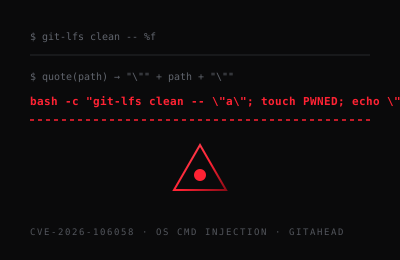
OS command injection in GitAhead Filter.cpp via unquoted filenames handed to bash -c.
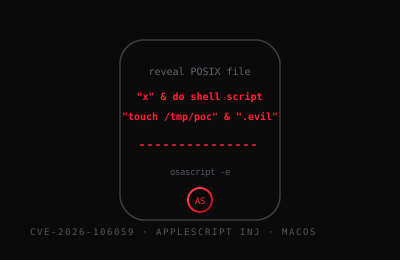
AppleScript injection in GitAhead ShowTool on macOS via unescaped filenames.
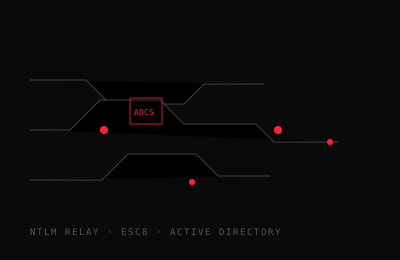
Relaying NTLM to Active Directory Certificate Services web enrollment to mint a DC certificate and DCSync.
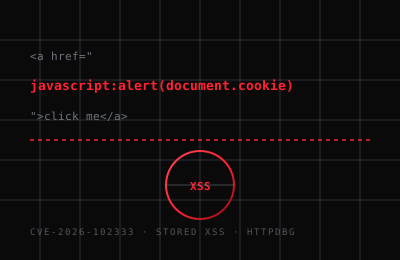
Stored XSS in httpdbg via a javascript: URL scheme that survives Mustache HTML-encoding.
If it cannot be reproduced from the post, it does not go in the post.
Every writeup includes the lab setup, the failed attempts, the code that mattered, and the detection surface it creates. No hero screenshots, no withheld primitives.
A horizontal cut through the archive. Swipe, drag, or use the controls — the entries stay in chronological order.
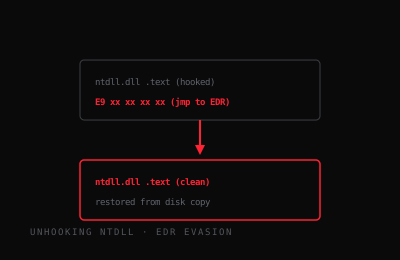
How userland hooks work, how to remove them, and why the technique is less effective than the blogs suggest.
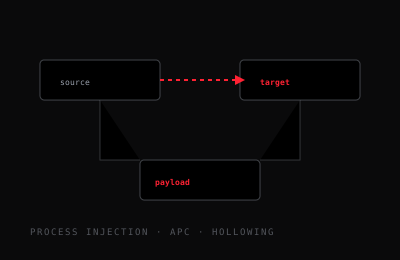
Classic injection, APC injection, and process hollowing with working code, compile commands, and the detection surface for each.
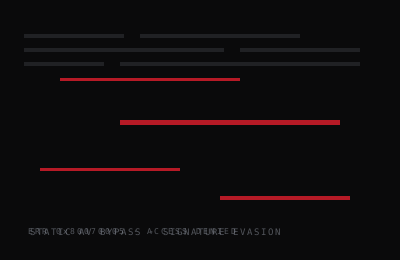
A field manual for making a PE invisible to static scanners: entropy, section names, API hashing, string obfuscation, and the compile flags that matter.
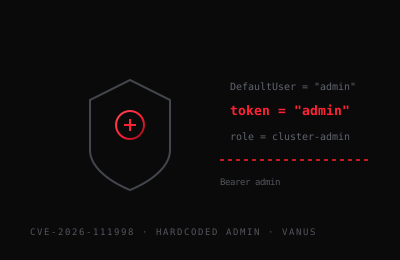
A hardcoded admin token in Vanus grants cluster-admin to anyone who guesses it.
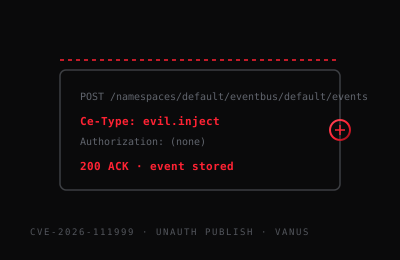
Unauthenticated CloudEvents publish on Vanus gateway port 8081.
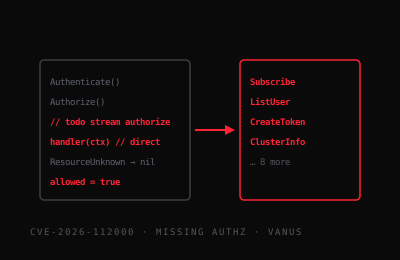
Missing authorization in Vanus gateway streaming RPCs and default-allow policy.
Ekko, Foliage, and timer-queue sleep obfuscation compared under the same memory scanner. The writeup is the thesis; the harness is proof.
OS command injection in GitAhead Filter.cpp via unquoted filenames handed to bash -c.
AppleScript injection in GitAhead ShowTool on macOS via unescaped filenames.
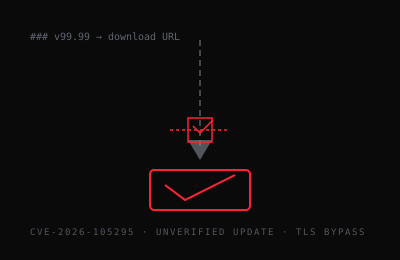
Unverified update installation and a persistent TLS bypass in GitAhead 2.5.0-2.7.1.
Relaying NTLM to Active Directory Certificate Services web enrollment to mint a DC certificate and DCSync.
Stored XSS in httpdbg via a javascript: URL scheme that survives Mustache HTML-encoding.
Requesting and cracking service tickets while keeping the opsec footprint low and the detection path visible.
Writing a minimal PE loader to understand how Windows maps and executes binaries, and where detection can land.
Why indirect syscalls buy less than people think, and what the detection side actually keys on.
Lab builds, opsec, and the small decisions that keep an engagement clean and a research habit alive.
Each track has its own standards, its own failure modes, and its own detection story. Pick the one you came for.
Root cause first. Public advisories, patch diffs, and the detection gaps that survive the patch.
7 entries
CVE-2026-111998 — Vanus: the Hardcoded `admin` Token That Owns the Cluster
Loaders, sleep obfuscation, and the engineering trade-offs behind implants. Built to understand, not to ship.
6 entries
Unhooking ntdll: removing EDR's eyes
Adversary emulation, identity abuse, and the operational discipline that separates a finding from a story.
2 entries
NTLM relay to ADCS: ESC8 from a standing start
Lab builds, opsec, and the small decisions that keep an engagement clean and a research habit alive.
1 entry
Build a lab that survives its own success
A small, opinionated arsenal. Everything runs in an isolated forest or a disposable VM, and everything is documented well enough to be criticized.
A staged PE loader with indirect syscall resolution, per-build API hashing, and a signed-host side-loading path. Used to study how much of a modern loader is actually necessary.
0 / 68
static detections
A sleep-obfuscation harness that compares Ekko, Foliage, and timer-queue approaches under the same memory scanner. The writeup is the thesis; the harness is proof.
3
techniques compared
AD CS enumeration and ESC-chain validation kit. Coerce, relay, enroll, then prove impact without leaving a domain controller in a broken state.
ESC 1-8
paths covered
A detection harness that replays real telemetry against Sigma rules and scores coverage per ATT&CK technique. Built so writeups end with something a blue team can use.
142
rules mapped
Lab policy: no live targets · no client data · no uncoordinated disclosure
Read the field notesAbout the author
I’m MJ (Dhurgesh) — a security researcher and student. I work across malware development, Active Directory attack paths, and vulnerability research. Most of what lands here starts as a lab question that refused to stay small: why a loader survives one scanner and dies to another, why a patch closes a CVE but not the class of bug behind it, why a detection looks good on paper and never fires.
The writing is deliberately slow. Each entry includes the setup, the failing attempts, the code that mattered, and the detection surface the technique creates. If a claim cannot be reproduced from the post, it does not belong in the post.
CVEs published
Public writeups
Research tracks
A working exploit is not an explanation. Patch diffs and primitive-level reasoning come first.
Every offensive technique ends with the telemetry it produces and the rule that catches it.
Research happens in a lab I own. Disclosure follows coordinated timelines, not posting schedules.
The dispatch
One long-form writeup, roughly twice a month. Malware engineering, CVE root cause, and the telemetry that catches both.
No tracking pixels · one email, twice a month